In dentistry, it is often said that “prevention is better than cure,” and this holds especially true for children’s oral development. Dental education emphasizes a proactive, long-term approach that involves close monitoring of your child’s growing teeth and jaws. Through regular check-ups, we aim to identify early signs of dental or jaw issues that may affect healthy growth and take timely steps to prevent these concerns from developing into future complications.
Essential Components of Dental Education for Parents
Parents are a child’s first and most influential caregivers, making education a key part of supporting healthy development. Effective dental education helps parents understand:
- Why healthy jaw and tooth development matters for speech, chewing, and long-term oral health
- The important role baby teeth play, including guiding permanent teeth into the correct position
- The need for timely and natural shedding of baby teeth, avoiding premature loss whenever possible
- How to build strong oral hygiene habits early, setting the foundation for lifelong health
- How to prevent cavities in both primary and permanent teeth
- The value of routine dental visits for early detection, prevention, and guidance
Benefits of Dental Education
Promotes Healthy Jaw Development
Early assessment ensures that the upper and lower jaws grow in harmony, supporting proper function and long-term oral wellness.
Improves Tooth Alignment
By guiding how permanent teeth emerge, early intervention helps prevent crowding and reduces future alignment challenges.
Simplifies Future Treatment
Early evaluation can reduce—or even eliminate—the need for lengthy or complex treatments later, making future care simpler and more efficient.
Timely Dental Guidance for a Healthier Smile
Dental education for growing children includes early interventions designed to identify and manage developing dental, skeletal, or muscular imbalances. These steps are most effective between the ages of 7 to 10, during the mixed-dentition phase when baby teeth and permanent teeth coexist. This early phase of care aims to:
- Address potential irregularities as soon as they appear
- Prevent minor issues from becoming more severe
- Reduce the need for complicated treatments later on
Common Early Dental Guidance Procedures
Serial Extraction
When there is insufficient space for all permanent teeth to erupt correctly, noticeable crowding or even impaction can occur. Serial extraction involves strategically removing selected baby or permanent teeth in a planned sequence to:
- Create adequate space
- Guide permanent teeth into a healthier position
- Avoid future complications related to severe crowding
Correction of Anterior Crossbite
An anterior crossbite occurs when one or more upper front teeth bite behind the lower front teeth. This condition can:
- Restrict the normal forward growth of the upper jaw
- Affect side-to-side jaw movements
- Negatively impact the gums around affected teeth
The ideal time for detection is when the upper front permanent teeth erupt, around age 7–8. If observed in baby teeth, immediate treatment is recommended. With early intervention, simple removable or fixed appliances can effectively correct the condition.
Habit-Breaking Therapy
Certain oral habits, if continued beyond age 3–4, can disrupt normal dental and jaw development. These include:
- Thumb sucking
- Tongue thrusting
- Mouth breathing
- Lip biting
Habit-breaking appliances are used as reminders to help children stop these habits. For mouth breathing, it is essential to identify and treat any underlying nasal obstruction before introducing an appliance.
Limited Braces (2×4 Appliance)
Some children have upper front teeth that protrude significantly, increasing their risk of injury from falls or accidents. To protect these teeth and improve alignment, a short-term treatment using braces on the upper front two or four teeth, along with the molars, may be used. This helps safely reposition the front teeth and minimize the risk of trauma.
Ideal Age for Your Child’s First Orthodontic Evaluation
Globally, dental specialists recommend that children have their first Orthodontic assessment at around 7 years of age. At this stage, we can:
- Examine jaw growth
- Evaluate the development of baby’s and permanent teeth
- Predict potential changes or future issues
- Recommend early guidance if necessary
How Parents Can Support Early Dental Guidance?
Parents play a vital role in their child’s oral health journey. Their involvement greatly contributes to successful long-term outcomes by:
- Maintaining regular dental visits to monitor growth and identify issues early
- Monitoring and discouraging harmful oral habits such as thumb sucking or tongue thrusting
- Encouraging proper brushing, flossing, and a tooth-friendly diet low in sugary snacks and drinks
- Ensuring their child wears any recommended dental appliances exactly as instructed by the dentist
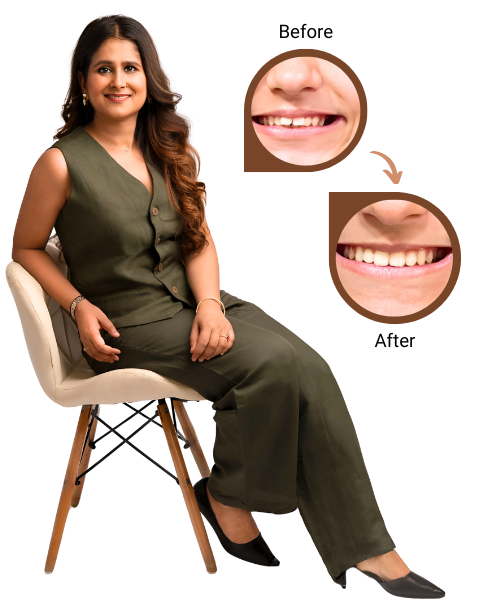
Invisalign expert | Smile designer | Dental department head – Nahar Medical Centre
DR. GUNJAN KEDIA
Dr. Gunjan Kedia is a skilled Orthodontist specializing in advanced Orthodontic treatments such as Braces, Clear Aligners and Dental Education. She combines precision, comfort, and modern techniques to create confident, healthy Smiles with faster results, making her a trusted choice for professional Dental Education services.
Knowledge Inspires Confident Smiles
Schedule a consultation with Dr. Gunjan Kedia today and experience dentistry that puts you at the center of care.